


Find the MAC knife that fits your needs
Not every knife is designed for everything. A well-chosen knife makes work easier and allows you to utilize its full potential. Below, you’ll find MAC knives categorized by shape, purpose, and blade edge type – for meat, fish, vegetables, bread, and everyday cooking.
Blade Edge Types
Choosing the right edge has a significant impact on the way the knife is guided and the nature of the cut.
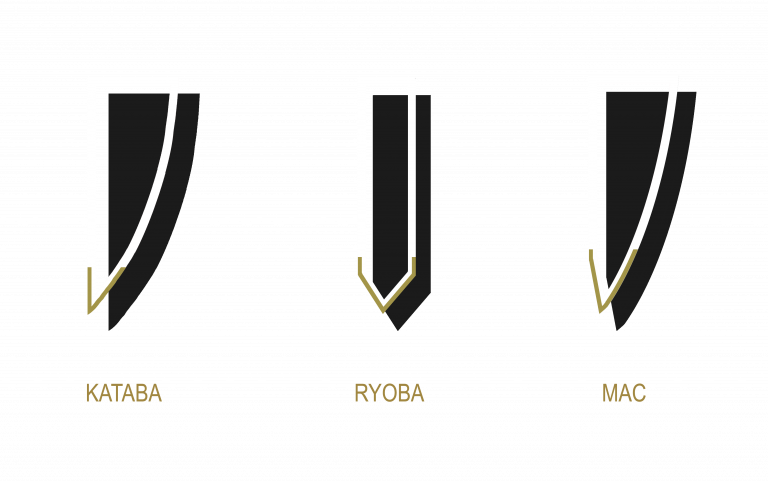
Kataba – traditional Japanese single-sided sharpening. Select TO, HO, SE, and JAPANESE series also offer left-handed versions.
Ryōba – double-sided sharpening, used in most modern kitchen knives.
MAC Edge – MAC Corporation’s proprietary design, combining the features of traditional Japanese sharpening and the Western V-shaped edge. Its geometry has been developed to ensure very good sharpness, precision, and ease of guiding the knife during cutting.
The graphic below shows the cross-section and differences between the three types of edges: Kataba, Ryōba and MAC.
Cross-section of a knife blade
Versatile kitchen knives and meat knives
Versatile kitchen knives and models designed for cutting and processing meat. They are perfect for everyday cooking, slicing, dicing, and portioning a variety of foods. Click on the image to go to the products, or expand to learn what each knife is best for.

A versatile knife for everyday kitchen work
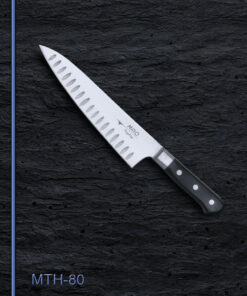
The chef’s knife is one of the most important knives in any kitchen. It’s designed for a wide range of uses: cutting meat, fish, vegetables, herbs, and performing most everyday kitchen tasks.
Depending on the design, it may have a Granton edge, whose special grooves create air pockets that prevent food from sticking to the blade.
Who is it for?
For those looking for a single, versatile knife that’s suitable for both home cooking and professional kitchen work.

Precisely Separating Meat from Bones
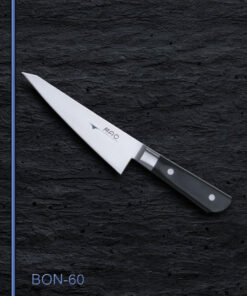
A boning knife is a specialized kitchen knife with a narrow, sharp blade and a precise tip, designed for precise separation of meat from bones.
Thanks to its slim design, it allows you to easily work around bones, joints, and hard-to-reach areas. It is suitable for preparing poultry, meat, and fish. Depending on the application, it is available in a rigid version, ideal for larger cuts of meat, or a more flexible version, which facilitates processing poultry and delicate products.
Who is it for?
For those who frequently prepare fresh meat, poultry, or fish and want greater precision in their preparation. Especially useful for cooking enthusiasts, chefs, and those who prepare their own meat at home.

Precise meat cutting and perfect slices
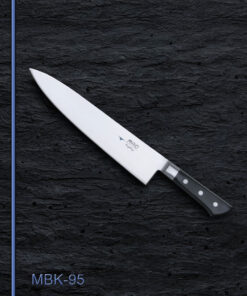
This carving knife is designed for precise processing of various types of meat. Its narrow, elongated blade easily cuts through the fibers, allowing you to cut even slices without tearing or crushing the meat.
Excellent balance and exceptional sharpness ensure complete control when carving roasts, steaks, poultry, and other meat dishes. This tool allows you to get the best results from your meat.
Who is it for?
For those who frequently prepare meat and value aesthetically pleasing, precise cuts. The perfect choice for steak lovers, home chefs, and professionals who value quality and ease of use.

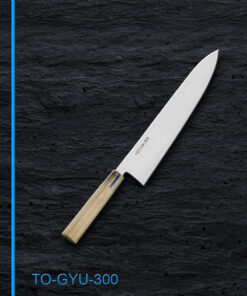
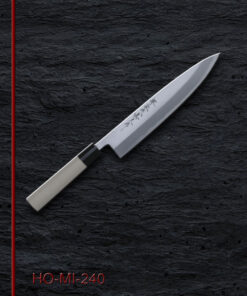
The Gyuto (ぎゅうとう) is one of the most versatile Japanese kitchen knives. Its design is derived from the European chef’s knife, but adapted to the distinctive Japanese precision cutting technique. The blade is sharpened on both sides using the Ryōba standard, making it comfortable for both right- and left-handed users.
The Gyuto is excellent for cutting meat, fish, and vegetables, chopping herbs, slicing, and most everyday kitchen tasks. Longer models provide a larger work surface and allow for smooth, long cuts.
A Gyuto with a traditional Japanese handle is called a Wa-Gyuto. Originally designed primarily for processing large cuts of beef, it has become one of the most important and versatile knives in the modern kitchen.
Available blade lengths: 180–360 mm
180–210 mm – ideal for home cooking
240–270 mm – particularly valued in professional catering
Who is it for?
For those looking for a single, high-quality, versatile knife, capable of handling both everyday cooking and the demanding work of a professional chef.
Kitchen knives for peeling and chopping vegetables
Knives designed for slicing, chopping, and peeling vegetables. From versatile knives for everyday cooking to precision models for finer tasks. Click on the image to go to the products, or expand to learn what each knife is best for.

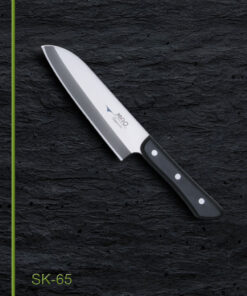
A Versatile Japanese Knife for Everyday Cooking – Santoku Bōchō (三徳包丁)
The Santoku is the Japanese equivalent of the European chef’s knife. Its name means “three virtues” and refers to its three primary uses: slicing, dicing, and slicing.
Thanks to its wide blade, excellent balance, and compact size, the Santoku is exceptionally convenient for everyday use. It’s perfect for preparing vegetables, fish, meat, and most other kitchen ingredients.
Sharpened with a traditional Japanese ryōba edge, it ensures a precise and clean cut.
Who is it for?
For those looking for a single, versatile knife for everyday cooking. An ideal choice for home chefs, cooking enthusiasts, and those who value lightness, comfort, and Japanese precision.

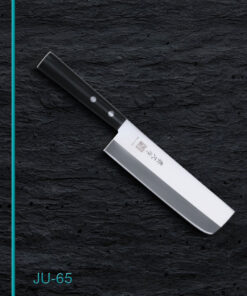
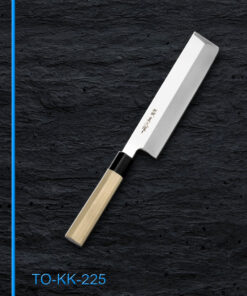
A Japanese knife designed for vegetables and precise slicing – Nakiri-bōchō (菜切り包丁)
The nakiri is a traditional Japanese vegetable knife with a distinctive, rectangular blade resembling a small cleaver. Unlike a cleaver, however, it has a very thin and precisely finished blade, allowing for clean cuts without crushing produce.
With its wide blade and flat edge, it is ideal for chopping, slicing, and preparing vegetables. Sharpened on both sides with a traditional Japanese ryōba edge, it provides comfortable use for both beginners and experienced chefs.
Who is it for?
For those who frequently prepare vegetables and value speed and precision. It will be especially appreciated by plant-based cuisine enthusiasts, home cooks, and anyone who enjoys a specialized knife for perfectly slicing vegetables.

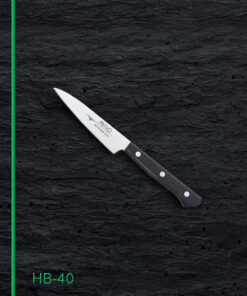
A Small Knife for Precision Kitchen Work
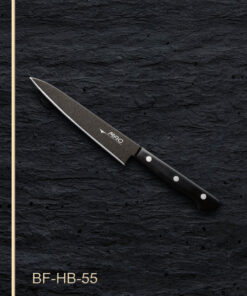
A paring knife is a small and lightweight knife with a short blade, typically up to 10 cm long. It is designed for tasks requiring precision and complete blade control.
It is perfect for peeling vegetables and fruit, removing peels, cleansing produce, and making fine, precise cuts. Various blade shapes allow you to tailor the knife to your specific kitchen application.
Who is it for?
For those who value precision and convenience in food preparation. A must-have in every kitchen, for both beginners and experienced chefs, as a complement to larger utility knives.
Kitchen knives for fish and sushi
The popularity of Japanese cuisine, particularly sushi and sashimi, has made Yanagiba and Deba knives widely available in European markets for many years, and they’re no longer perceived as exotic kitchen tools. Their unique design makes them perfect for working with fish, offering precision and a cutting style difficult to achieve with standard kitchen knives. Click on the image to go to the products, or expand to learn what each knife is best suited for.

Yanagiba – the traditional blade of sushi masters
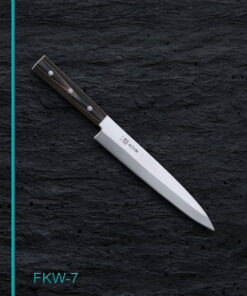
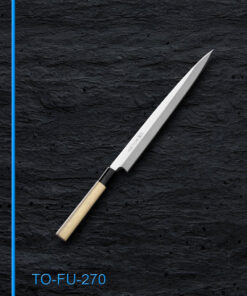
The Yanagiba-bōchō (柳刃包丁) is one of the most distinctive Japanese knives, traditionally used by sushi and sashimi masters. Its long, slender blade allows for a single, smooth cut, allowing the fish to retain its natural structure, texture, and aesthetic appeal.
The Yanagiba is sharpened on one side with a Kataba edge, resulting in exceptional sharpness and precise blade control. It is excellent for filleting fish and preparing even, thin slices of sushi and sashimi. The distinctive blade length allows for cutting larger fillets without the need for many short strokes.
This type of knife originates from the Kansai region, particularly the Osaka area, where the tradition of preparing sushi and sashimi developed.
Available blade lengths: 270–330 mm
Who is it for?
For sushi masters, professional chefs, and Japanese cuisine enthusiasts who require maximum control, exceptional sharpness, and precision when working with fish, the Yanagiba is a specialized tool for those who want to prepare sushi and sashimi according to traditional Japanese art.
We also offer knives designed for left-handed users, with blade geometry specifically designed for left-handed use.

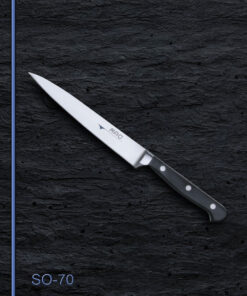
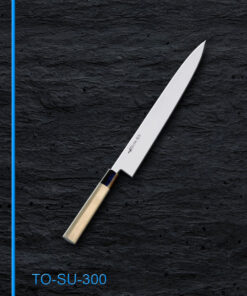
Slicer – Precise Slicing and Filleting of Meat and Fish
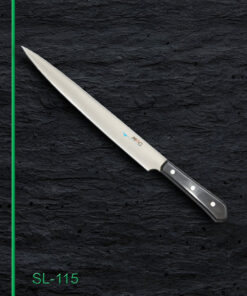
The Slicer is a long, slender Western-style kitchen knife, inspired by the design of the traditional Japanese Yanagiba knife. Its narrow, elongated blade is designed for long, smooth cuts, creating thin, even slices without unnecessary damage to the product’s structure.
It is perfect for slicing meat, carving roasts, filleting fish, and preparing thin slices. The long cutting edge reduces the number of blade movements, resulting in greater precision, aesthetics, and comfort.
Who is it for?
For those who demand maximum precision when filleting meat and fish. It is an excellent choice for sushi enthusiasts, lovers of fine cuisine, and professional chefs for whom a perfect, even slice is essential.

Deba – a traditional Japanese fish processing knife
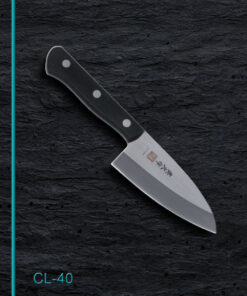
The Deba-bōchō (出刃包丁) is a specialized Japanese knife with a thick, heavy, and exceptionally strong blade, traditionally sharpened on one side with a Kataba edge. It was designed primarily for the demanding processing of whole fish, where greater strength and stability are required.
It is excellent for cutting heads and tails, filleting, deboning, and portioning fish. With proper technique, it can also be used for separating shellfish parts such as crab legs or claws.
The Deba is not intended for chopping large bones. Avoid lateral loading of the blade edge during use, as this can lead to chipping or damage. This specialized tool is best utilized for controlled fish work.
The first Deba knives appeared during the Edo period in Sakai, one of the most important centers of Japanese knifemaking.
Available blade lengths: 150–330 mm
For whom?
For chefs, sushi masters, fishermen, and enthusiasts who frequently prepare whole fish and need a strong, stable blade designed specifically for fish processing.
Serrated kitchen knives and others
Serrated bread knives and specialized steak, cheese, and frozen food knives are designed to provide the right cut for different types of produce. Click on the image to go to the products, or expand to learn what each knife is best for.
Perfect Meat Slicing at the Table
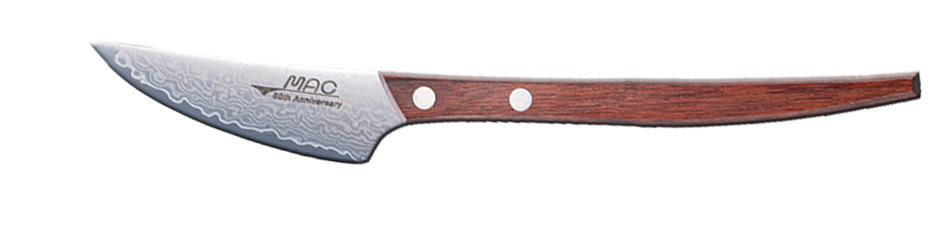
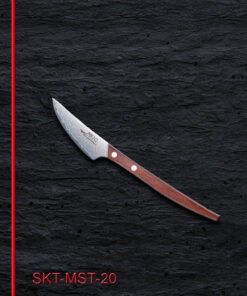
This steak knife is designed for precise slicing of juicy cuts of meat, such as steaks, roasts, and grilled meats. The sharp, well-profiled blade allows you to cut through the fibers of the meat without tearing or crushing, preserving its structure and juiciness.
The excellent balance and comfortable grip ensure comfort during use, and the high-quality workmanship make this knife ideal for both everyday meals and special occasions.
Who is it for?
For lovers of steaks, grilling, and high-quality meat. An ideal choice for those who want complete comfort while cutting, and for restaurants serving meat dishes.

Precise Slicing of Soft and Delicate Products
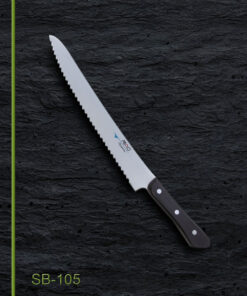
The Western-style serrated knife is often called a bread knife, but its uses are much broader. Thanks to its long blade and serrated edge, it is perfect for slicing large, even slices of roasts, poultry, hams, and other meats.
The specially designed serrations easily cut through products with a hard surface and soft interior, making it also suitable for bread, tomatoes, and delicate vegetables without crushing their structure.
Who is it for?
For those who frequently slice bread, fresh vegetables, cold cuts, and roasted meats. An ideal choice for home cooks who need a long and reliable knife for precise slicing of large products.

Precise Slicing of Various Cheeses
This cheese knife is designed to facilitate slicing both soft and harder cheeses. The carefully contoured blade allows for even slices and portions without excessively crushing the delicate structure of the product.
The special design prevents cheese from sticking to the blade surface, providing greater comfort during slicing. It is perfect for preparing cheeseboards, snacks, and everyday dishes requiring precise portioning.
Who is it for?
For cheese lovers, those who prepare elegant snack boards, and anyone who appreciates well-chosen kitchen tools. An ideal choice for both home use and professional catering.

Specialist in Frozen Food Portioning
This frozen food knife is designed for safe and precise slicing of hard, frozen foods. The special blade design allows you to effectively portion frozen meat, fish, and other foods while maintaining control.
This practical tool is perfect for both professional catering and well-equipped home kitchens.
Who’s it for?
For those who regularly prepare frozen foods and need a suitable portioning tool. It will be especially appreciated by chefs, restaurants, and those who store larger quantities of food in the freezer.
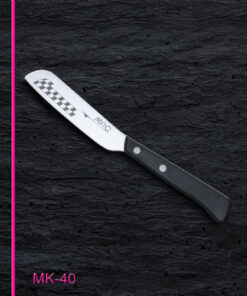
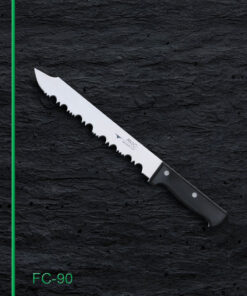
Traditional Japanese Kitchen Knives
The kitchen knives we use to cut food speak volumes about more than just culinary culture. The quality of their blades, their refined shape, and the effort put into their production reflect our respect for what nature provides. A wide range of Wa-Bocho knives—Japanese-style—are available in Japan. Their exquisite craftsmanship and exceptional sharpness make these knives prized worldwide by professional chefs who consider cooking an art form. Click on the image to go to the products, or expand to learn what each knife is best suited for.

Specialized Japanese Fugu Knife – Fuguhiki bōchō ふぐ引包丁
The Fuguhiki is a specialized Japanese knife with a profile similar to the Yanagiba, but its blade is narrower, thinner, and more slender. It is designed for precisely slicing fugu fish into extremely thin slices.
The Fuguhiki is particularly prized for preparing usuzukuri, the traditional sashimi-slicing technique, in which the fish is cut into almost transparent slices. These slices are so thin that the pattern of the plate beneath the sashimi remains visible. The thin slices are then carefully arranged, creating a distinctive and striking composition.
Thanks to its very thin blade, the Fuguhiki allows for extremely precise cuts, achieving even, delicate slices without unnecessary damage to the fish.
The Fuguhiki is available in blade lengths from 240 to 330 mm.
Who is it for?
For professional chefs and experienced Japanese cuisine enthusiasts who specialize in sashimi preparation and want to work using the traditional usuzukuri technique. This highly specialized knife is designed for tasks requiring exceptional precision.

A Traditional Japanese Knife for Experienced Chefs – Kiritsuke Bōchō 切りつけ包丁
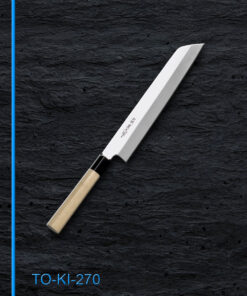
The Kiritsuke is a traditional Japanese knife with a single-edged blade, combining the characteristics of the Yanagiba and Usuba knives. The long, straight blade with a distinctive point ensures high precision and allows for long, clean cuts.
The Kiritsuke is primarily used for precise slicing of vegetables, fish, and other products requiring precise blade control. Due to its design and cutting technique, the Kiritsuke requires more experience than typical kitchen knives.
In traditional Japanese cuisine, the Kiritsuke is often associated with the chef and high culinary skills. It is not without reason that in many restaurants, its use was traditionally reserved for the most experienced chefs.
Who is it for?
For experienced chefs and enthusiasts of Japanese cuisine who value precision, blade control, and traditional slicing techniques. This is the choice for people who are looking for a unique Japanese knife and are ready to use its full capabilities.

Traditional Japanese Knife for Precise Vegetable Slicing – Kakugata Usuba 角形薄刃
The Kakugata Usuba is a traditional Japanese knife designed primarily for precise slicing of vegetables and fruits, especially those served raw. It is characterized by a wide, straight blade and a single-sided kataba sharpening.
The very thin and sharp blade allows for clean cuts with minimal damage to the product’s structure. This is particularly important when preparing delicate vegetables, where preserving freshness, appearance, and natural texture is crucial.
The Kakugata Usuba is also designed for the demanding Katsuramuki technique, which involves rotating, very thin peeling of vegetables, most often daikon radish. The resulting long, thin sheet can then be used for preparing garnishes and other elements of traditional Japanese cuisine.
The Kakugata Usuba is available in blade lengths typically ranging from 180 to 210 mm.
Who is it for?
For professional chefs and experienced Japanese cuisine enthusiasts who need maximum precision when processing vegetables and want to master traditional techniques such as Katsuramuki.

Precise Japanese knife for cutting meat and fish – Sujihiki bōchō 筋引包丁
Sujihiki is a long, slender Japanese knife with a narrow and thin blade, intended primarily for precise cutting of meat and fish. Its design allows for long, smooth cuts that limit damage to the structure of the cut product.
The sharp and thin blade provides little resistance when cutting, making Sujihiki perfect for portioning meat, cutting roasts, fish fillets and preparing thin slices. When cutting fish into sashimi, precise cutting helps preserve its delicate structure, appearance and texture.
Unlike traditional sashimi knives such as the Yanagiba, the Sujihiki is usually double-sided (ryōba), making it more versatile and can be comfortably used by both right- and left-handed people.
Sujihiki are available in blade lengths from 210 to 360 mm. The most popular sizes are 240, 270 and 300 mm.
For whom?
For chefs and cooking enthusiasts who are looking for a long, precise knife for cutting meat and fish. It is a great choice for portioning roasts, fillets and preparing thin and even slices.
Traditional Japanese Kitchen Knives
European knives have long been valued for their versatility, durability, and everyday comfort. Compared to traditional Japanese knives, they often have a slightly thicker blade and a wider sharpening angle, which increases their resistance to damage.
This doesn’t mean that one is better than the other. These are two different blade design philosophies – the European approach emphasizes versatility and durability, the Japanese approach focuses on sharpness and precision.
MAC combines both approaches, offering European shapes made from Japanese steel and sharpened with the distinctive MAC edge.
It’s worth going beyond the usual patterns and pursuing solutions that combine the best features of both technologies.

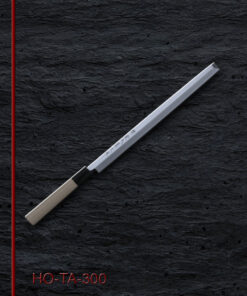
Traditional Japanese sashimi knife – Takohiki bōchō タコ引包丁
The takohiki is a long, slender Japanese knife with a single-sharpened blade (kataba) and a distinctive rectangular tip. It is traditionally used primarily for precisely slicing sashimi, particularly octopus, but is also excellent for slicing other fish into thin, even slices.
The straight tip of the blade facilitates precise slicing and transferring prepared pieces of fish from board to plate. The long, thin blade allows for smooth cuts in a single motion, without sawing the product, while preserving its structure and appearance.
The takohiki originates from the Kantō region, particularly Tokyo, where it is still associated with traditional cuisine and upscale restaurants specializing in sushi and sashimi. Its rectangular tip distinguishes it from the more popular Yanagiba knife, whose pointed tip once resembled the shape of a Japanese sword.
Takohiki is available in blade lengths typically ranging from 210 to 330 mm.
Who is it for?
For professional chefs and Japanese cuisine enthusiasts who prepare sushi and sashimi and expect the highest precision in cutting. Especially recommended for those who appreciate traditional knives from the Tokyo region and the working techniques characteristic of Japanese cuisine.
Japoński nóż Mioroshi

The Strength of the Deba and the Precision of Mioroshi Deba Fish Knifeみおろし出刃
The Mioroshi Deba is a knife designed for comprehensive fish work. Its design combines the strength needed for dressing fish with the precision required for filleting and portioning.
Compared to the classic Hon-Deba, the Mioroshi Deba has a longer, narrower, and thinner blade, making it more versatile for fish work. It allows for efficient separation of fillets from bones and backbones, as well as precise cuts in meat.
The single-sided kataba sharpening ensures high precision in blade guidance. The distinctive design of the Mioroshi Deba allows for a seamless transition from heavier fish dressing to precise filleting and portioning.
The blade is made with traditional Kasumi construction, combining high-carbon YASUKI White 2 steel with a soft facing steel. This combination allows for very high sharpness, good control when cutting, and makes sharpening the knife easier.
Who is it for?
For chefs and enthusiasts of Japanese cuisine who regularly prepare whole fish and need a single, specialized knife for dressing, filleting, and portioning, this is the choice for those who expect the traditional design of the Deba combined with the greater precision and versatility of the Mioroshi Deba.

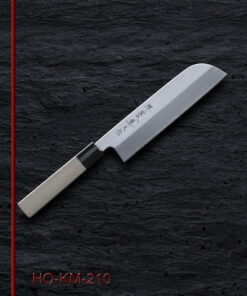
A Versatile Japanese Usuba for Precise Vegetable Slicing – Kamagata Usuba 鎌形薄刃
The Kamagata Usuba is a traditional Japanese knife for precise slicing and preparing vegetables, characteristic of the Kansai region, particularly Osaka. Its name refers to the sickle-like shape of the blade tip (“kama”).
Unlike the Kakugata Usuba, which has a straight, square tip, the Kamagata Usuba has a slightly curved tip. This design allows for greater freedom in precise cuts and traditional decorative techniques.
Like other Usuba, the Kamagata has a very thin blade sharpened on one side with a kataba edge. This allows for clean cuts of vegetables with great precision, preserving their texture, appearance, and freshness.
The Kamagata Usuba is available in blade lengths typically ranging from 180 to 210 mm.
Who is it for?
For chefs and Japanese cuisine enthusiasts who value precision, traditional cutting techniques, and the ability to make decorative cuts for vegetables. It’s especially well-suited to those who prefer the more versatile Usuba design with a curved tip.

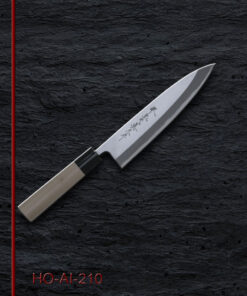
Versatile Deba for Filleting and Carving Fish – Ai-Deba bōchō 相出刃包丁
The Ai-Deba is a Japanese knife similar in design to the classic Deba, but with a thinner blade, making it more versatile for working with fish. The blade is sharpened on one side with a traditional kataba edge, ensuring precise cutting.
The name Ai-Deba refers to the combination of two applications. The knife is designed for both filleting and carving fish, making it a lighter and more versatile alternative to the classic Deba.
The thinner blade allows for more precise cuts through fish flesh while retaining the Deba’s characteristic design and the ability to work with whole fish.
The Ai-Deba is available in blade lengths from 135 to 270 mm.
Who is it for?
For chefs and Japanese cuisine enthusiasts who need a single knife for filleting and carving fish. A good choice for those seeking greater precision and versatility than the classic Deby.
SECURE PAYMENT
By bank transfer, Paypal, and electronic payments guaranteed by Montonio.
FREE DELIVERY
For purchases over PLN 300, cash on delivery is not available.
5-YEAR WARRANTY
All knives are covered by a 5-year manufacturer’s warranty from the date of purchase.
Official MAC Distributor
100% original knives from Japan
Which kitchen knife should you choose?
Find the MAC knife that's right for you
With over 140 models, choosing can be difficult. Use our guide or let the AI Assistant help you find the right model.