Skip to content
Japanese craftsmanship for the kitchen of tomorrow
Reliable Japanese quality
Enjoy cooking!
Feel the sharpness!
It's time, get started
znaki mac222

FREE DELIVERY from 350 PLN

* does not apply to cash on delivery shipments

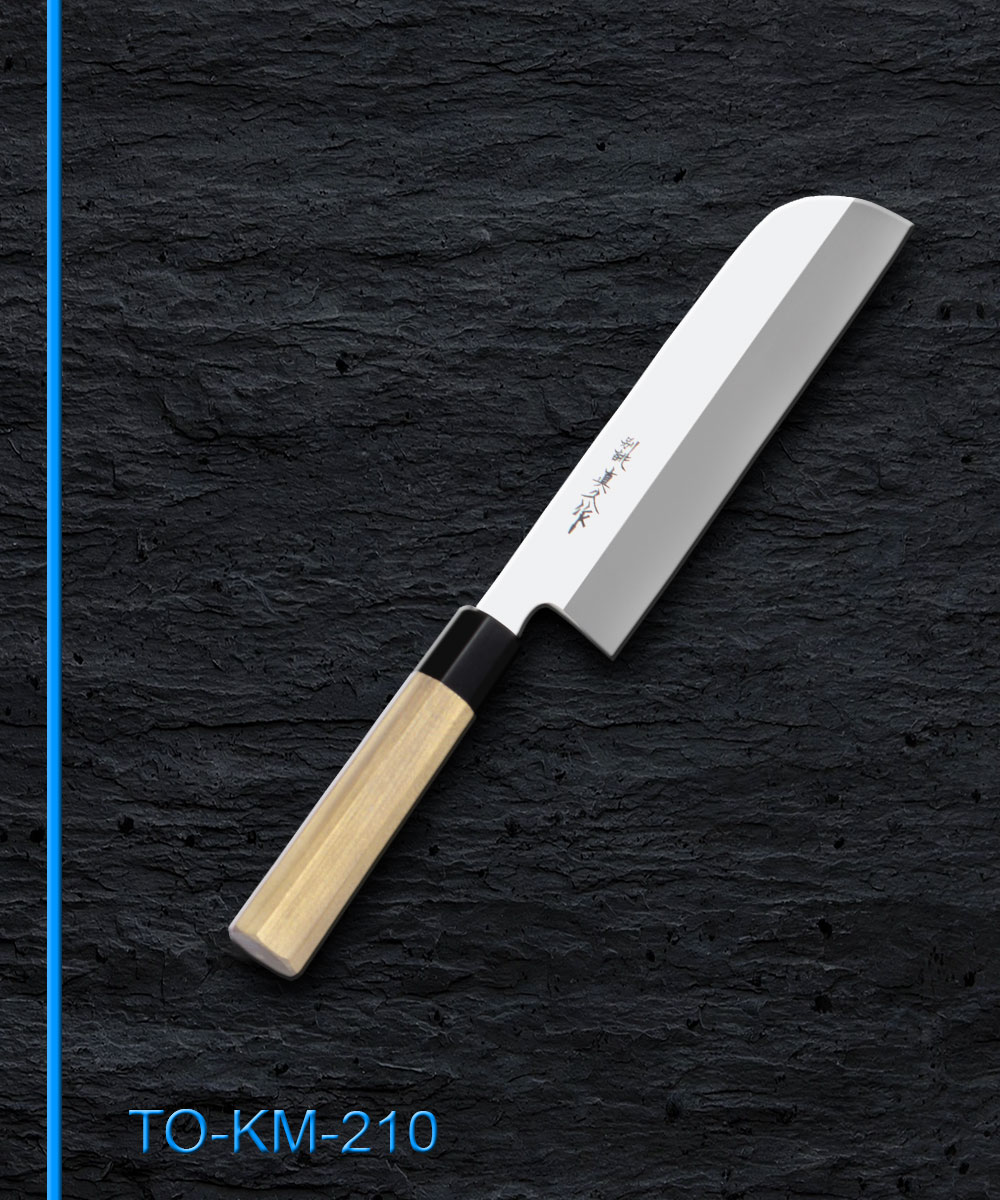
TO-KM-210

3,440.00  brutto

In stock

Additional information

Type of knife

, , , , , ,

Blade length (mm)

Total length (mm)

Knife weight (g)

Steel type

Rockwell hardness of steel

Stain-resistant

Handle

1 review for TO-KM-210

  1. Boyce

    I dreamed of a real Japanese knife, so I chose this model and I am very pleased with it.

Add a review

TO-KM-210

TO-KM-210 Kamagata Usuba – vegetable carving in Honoyaki perfection

The TO-KM-210 from the prestigious TO Honoyaki series is not an ordinary vegetable knife. It is a tool created for those who treat the kitchen as an art form, where every slice is a deliberate, refined gesture. In this Honoyaki interpretation, the Kamagata Usuba (鎌形薄葉) embodies the essence of Japanese perfectionism: absolute precision, silent cutting, and total control over the ingredient.

This traditional Japanese knife for vegetables and fruits served raw is designed to preserve natural color, structure, and flavor. The ultra-thin, razor-sharp Honoyaki blade minimizes cellular damage, limits oxidation, and delivers an almost perfectly smooth cut surface—exactly what top-tier Japanese cuisine demands.

The distinctive sickle-shaped Kamagata tip is a hallmark of the Kansai (Osaka) school. Unlike the classic square-tipped Usuba from the Kanto region, the curved tip offers greater versatility and fluidity of motion. This is why Kamagata Usuba is the preferred choice of masters specializing in Kazari-giri—decorative vegetable cutting where technique, aesthetics, and rhythm are equally important.

The tall, elongated blade of the TO-KM-210 handles large ingredients such as cabbage or daikon with ease, allowing long, uninterrupted strokes. Its geometry also supports guiding the blade with the knuckles of the free hand, ensuring perfectly consistent slice thickness—an essential detail in refined Japanese cooking.

The TO Honoyaki series represents the pinnacle of Japanese knife-making. Each TO-KM-210 is crafted through a demanding process that requires years of experience, precise temperature control, and complete focus from the master smith. These knives are made individually—without compromise, without automation, without mass production. That is why Honoyaki knives are sought after by professional chefs, sushi masters, and collectors worldwide.

The TO-KM-210 Kamagata Usuba is for those who understand that true luxury in the kitchen is not about quantity, but about class.
This is a knife that does more than cut—it defines the way you work.

If you would like to learn more about Japanese kitchen knives and how to choose the right ones for your kitchen or restaurant, visit our knife selection guide.

Recommended recipe

Roasted Sweet Potato, Beetroot and Red Onion Salad with Miso Dressing

Hearty, aromatic and naturally sweet, this salad combines roasted root vegetables with a bold, umami-rich miso dressing. Perfect as a light main course, a side dish, or an elegant addition to any table.

Ingredients (serves 4)

Vegetables:

  • 3 large or 4 small sweet potatoes, cut into wedges (skin on)

  • 4 small beetroots, trimmed, peeled and quartered

  • 2 small red onions, cut into wedges

  • olive oil

  • salt and freshly ground black pepper

To serve:

  • 110–120 g baby leaf salad mix

  • fresh coriander leaves or an Asian leaf mix / microgreens

  • lime wedges

Miso dressing:

  • 2 tbsp white miso paste

  • 4 tsp rice vinegar

  • 2 tbsp soy sauce

  • 2 tbsp clear honey

Method

  1. Roast the vegetables
    Preheat the oven to 200°C (180°C fan).
    Place the sweet potatoes, beetroot and red onion in a large roasting tray. Toss with olive oil, salt and pepper.
    Roast for 30–40 minutes, until tender and lightly caramelised.

  2. Make the dressing
    While the vegetables are roasting, whisk together all the dressing ingredients in a bowl until smooth and well combined.

  3. Combine flavours
    About 10 minutes before the vegetables are done, drizzle over half of the miso dressing and gently toss to coat evenly. Return to the oven.

  4. Assemble and serve
    Transfer the roasted vegetables to a large bowl. Add the baby leaf salad and the remaining dressing, then gently toss.
    Divide between four plates, scatter with fresh coriander or microgreens and serve with lime wedges on the side.

Tip:

This salad is also delicious served warm as a standalone dish, or topped with grilled tofu, halloumi or roasted salmon. The miso dressing can be made in advance and stored in the fridge for up to 3 days.

You may also like…

Zdjęcia ilustrujące przepisy na stronach produktowych wykorzystano z serwisów: photo-ac.com, freepik.com i pixabay.com na podstawie licencji udzielanych przez owe serwisy.

Jeśli potrzebujesz pomocy przy wyborze noży, pomożemy Ci

Podaj swoje imię i nazwisko, numer telefonu oraz godziny w jakich możemy skontaktować się z Tobą.

Oddzwaniamy tylko pod numery telefonu z polskim numerem kierunkowym +48.