Skip to content
Japanese craftsmanship for the kitchen of tomorrow
Reliable Japanese quality
Enjoy cooking!
Feel the sharpness!
It's time, get started
znaki mac222

FREE DELIVERY from 350 PLN

* does not apply to cash on delivery shipments

SBK-95

1,560.00  brutto

In stock

Additional information

Type of knife

, , , , , ,

Total length (mm)

Blade length (mm)

Knife weight (g)

Blade edge

Steel type

Rockwell hardness of steel

Stain-resistant

Handle

Reviews

There are no reviews yet.

Be the first to review “SBK-95”

SBK-95

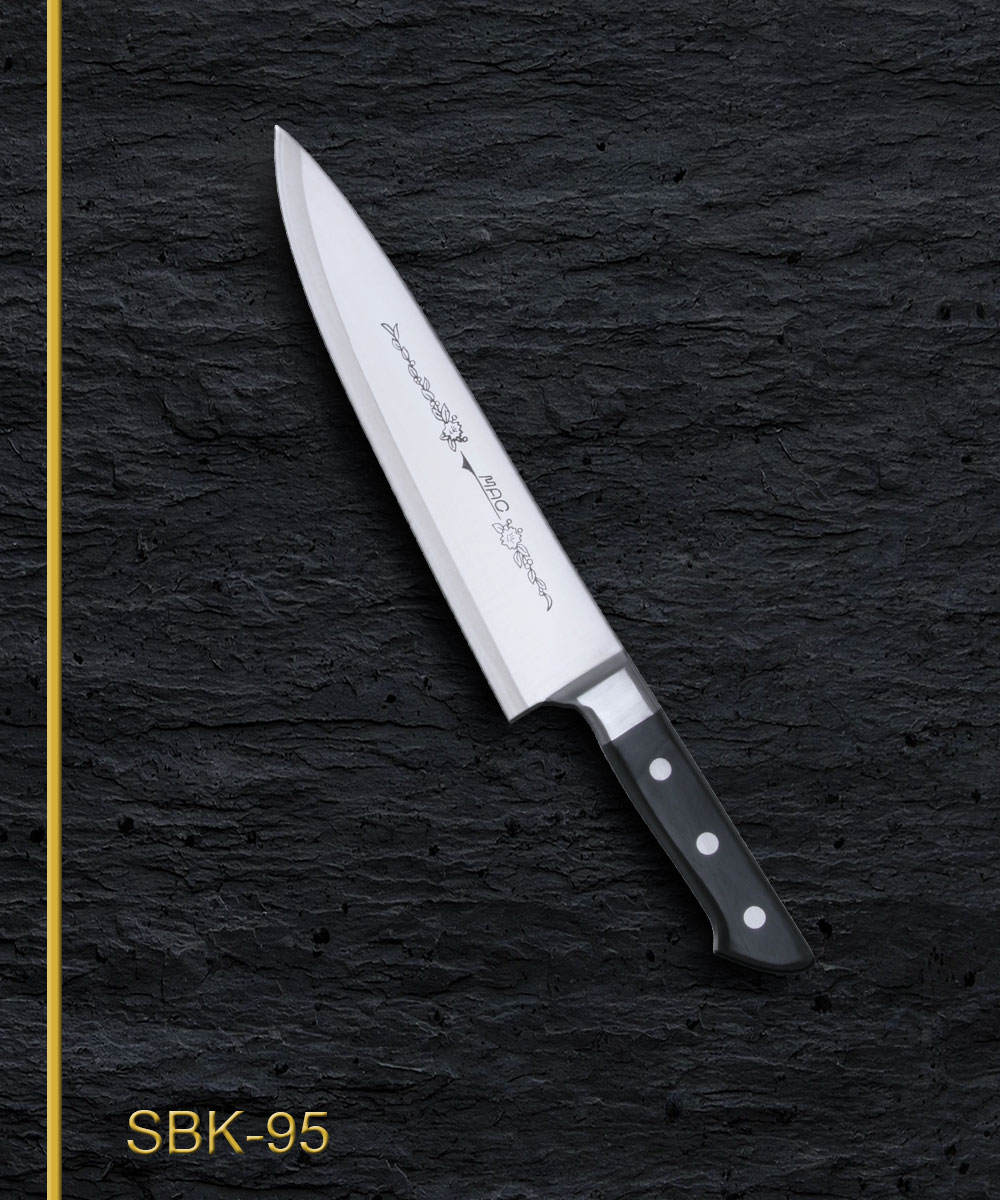
SBK-95  — luxury that defines the level of work in the kitchen

The MAC ULTIMATE kitchen knives are not just another product line. They represent a class of their own — a fusion of prestige, flawless craftsmanship, and a form that commands respect from the very first touch. Anyone who has ever held a knife from this series knows one thing immediately: this is a tool that redefines the experience of cooking.

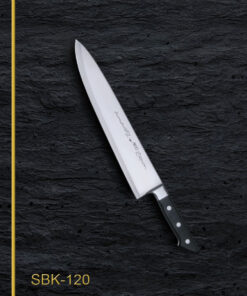
The SBK-95 model is the core of this line — versatile, elegant, and uncompromisingly effective. Chosen by those who treat the kitchen as a stage and their craft as an art form, it is also available in larger variants SBK-105 and SBK-120, allowing the knife to be perfectly matched to individual working style and ambition.

Each knife is created through a meticulous, multi-stage production process by Japanese masters from the legendary Seki region, renowned worldwide for its knife-making tradition. The blade features a European-inspired profile with double-sided sharpening, combining familiar geometry with Japanese precision to deliver complete control over every cut.

To increase hardness, the steel undergoes sub-zero heat treatment, achieving an impressive 60 HRC on the Rockwell scale. The result is an aggressive, long-lasting sharpness that holds up even under intensive, daily use. This is a blade that cuts with confidence and ease, without the need for constant edge maintenance.

The handle has been designed with exceptional attention to ergonomics. Free of sharp edges and perfectly balanced in relation to the blade length, it fits naturally in the hand. This balance allows for hours of comfortable work — without fatigue, without loss of control, and with genuine pleasure in every precise movement.

SBK-95 ULTIMATE is a knife that fuels creativity. It encourages experimentation, elevates technique, and delivers immediate, lasting satisfaction. It is a tool that inspires you to cook at a higher level — every single day.

With proper sharpening and care, knives from the ULTIMATE series retain their exceptional quality, sharpness, and prestige for many years, becoming a trusted companion in the kitchen.

This is not an ordinary kitchen knife.
It is a statement of the level at which you choose to cook.

Recommended recipe

Kamameshi – traditional Japanese rice pilaf

Kamameshi originates from the Taishō and early Shōwa periods, when cooking rice in iron pots called kama became more common in Japanese households and temples. Over time, seasonal ingredients such as mushrooms, chicken, fish, and vegetables were added directly to the rice, creating a complete meal prepared in a single pot. The dish later gained popularity in railway bento culture (ekiben), where it was served as a warm, aromatic meal for travelers. Kamameshi – a traditional Japanese pot-cooked pilaf – reflects the essence of Japanese culinary philosophy: simplicity, seasonality, and the ability to draw deep flavor from natural ingredients.

Ingredients (2 servings)

  • 300 g Japanese short-grain rice

  • 350 ml dashi stock

  • 1 tbsp soy sauce

  • 1 tbsp sake

  • 1 tsp mirin

  • 100 g chicken breast or boneless thigh (optional)

  • 1 small carrot (cut into thin strips)

  • 50 g shiitake mushrooms (fresh or rehydrated dried)

  • 50 g bamboo shoots or menma (optional)

  • 1–2 tbsp green peas or edamame

  • Chopped scallions or mitsuba for finishing

Preparation

  1. Rice
    Rinse the rice thoroughly until the water runs clear. Let it rest for 20 minutes, then drain well.

  2. Base
    In a heavy-bottomed pot (or a traditional kamameshi pot), combine dashi, soy sauce, sake, and mirin. Add the rice without stirring.

  3. Toppings
    Arrange the chicken, carrot, shiitake, and bamboo shoots evenly on top of the rice. Do not mix them into the rice.

  4. Cooking
    Cover the pot. Bring to a boil over medium heat, then reduce to very low heat and cook for 12–15 minutes, until all the liquid is absorbed.

  5. Resting
    Remove from heat and let rest, covered, for 10 minutes.

  6. Finishing
    Gently mix the rice with the toppings. Sprinkle with scallions or mitsuba and add peas or edamame.

Tips

  • Traditional kamameshi does not require added salt — flavor comes from dashi and soy sauce.

  • You can make seafood versions (clams, shrimp) or vegetarian versions with tofu and mushrooms.

  • The lightly crispy rice layer at the bottom (okoge) is considered a desirable feature.

This dish needs no decoration. One pot, one moment of focus, and flavor that speaks for itself.

You may also like…

Zdjęcia ilustrujące przepisy na stronach produktowych wykorzystano z serwisów: photo-ac.com, freepik.com i pixabay.com na podstawie licencji udzielanych przez owe serwisy.

Jeśli potrzebujesz pomocy przy wyborze noży, pomożemy Ci

Podaj swoje imię i nazwisko, numer telefonu oraz godziny w jakich możemy skontaktować się z Tobą.

Oddzwaniamy tylko pod numery telefonu z polskim numerem kierunkowym +48.