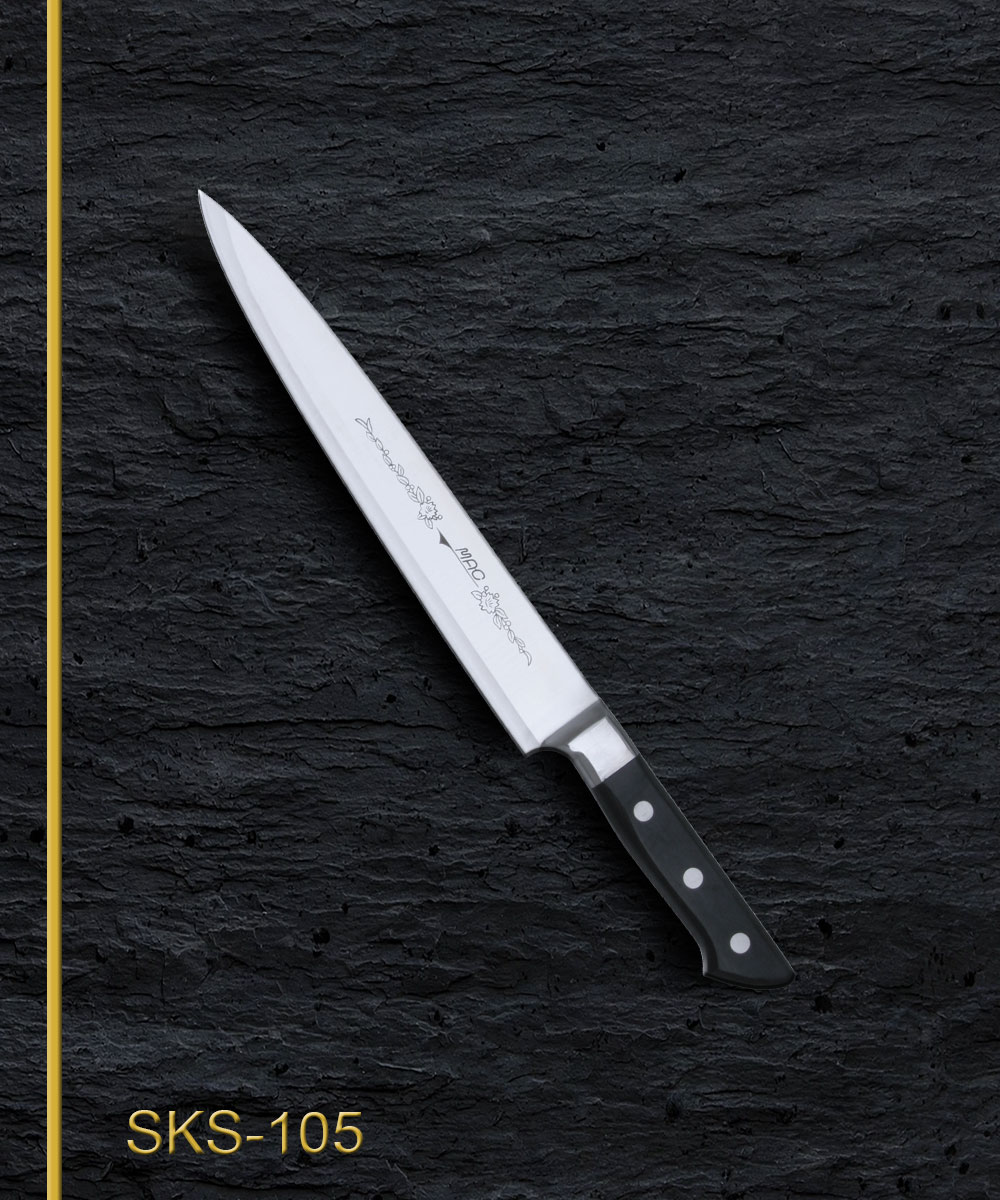
SKS-105 ULTIMATE — precision cutting in its most prestigious form
Do you feel satisfaction when others admire not only the taste, but also the flawless presentation of the dishes you prepare? In the world of true culinary craftsmanship, the key to such results is simple — uncompromising quality tools. Knives from the MAC ULTIMATE series are created for those who refuse mediocrity and expect their equipment to reflect a higher standard of performance and refinement.
The ULTIMATE series is a fusion of prestige, tradition, and advanced craftsmanship, continuously developed by MAC Corporation since 1965. Despite the evolution of modern manufacturing techniques, these knives are still produced in accordance with the philosophy of Japanese master craftsmen from the legendary city of Seki, globally recognized as a center of elite blade-making. Each knife is the result of a meticulous, multi-stage process focused on achieving absolute precision and flawless finishing.
The SKS-105 model embodies elegance and functional excellence. Its long, narrow, razor-sharp blade is engineered to separate fish skin from flesh in a single, smooth motion with surgical accuracy. It is a tool designed for delicate, high-precision work — especially when preparing fish for raw dishes, where clean cuts preserve both visual aesthetics and valuable nutritional qualities.
Unfailing sharpness and long-term durability are hallmarks of MAC knives. Thanks to advanced steel processing and Japanese precision engineering, the blade maintains exceptional cutting performance while ensuring stability and control over years of intensive use. This is a knife that does not merely meet professional expectations — it consistently exceeds them.
The distinctive presence of the ULTIMATE series is matched by perfect balance and refined ergonomics. The knife rests naturally in the hand, moves effortlessly, and provides complete confidence with every motion. From the very first use, it becomes clear that this is a luxury-class tool that elevates every culinary action.
The craftsmanship of MAC knives has been recognized by master chefs in top-tier restaurants worldwide and honored in numerous international competitions. It is a choice embraced by professionals, collectors, and passionate cooks who understand that true quality is revealed in detail and felt in every precise cut.
Owning the SKS-105 from the ULTIMATE series is not only about working with superior precision — it is about expressing a level of dedication where cooking becomes an art rather than a routine. It is a knife that attracts attention, commands respect, and naturally enhances the prestige of your kitchen.
Proper sharpening and correct maintenance, as described in the care guide for Japanese steel knives, will ensure that its exceptional sharpness, aesthetics, and luxurious character are preserved for many years of use.






Reviews
There are no reviews yet.