Skip to content
Japanese craftsmanship for the kitchen of tomorrow
Reliable Japanese quality
Enjoy cooking!
Feel the sharpness!
It's time, get started
znaki mac222

FREE DELIVERY from 350 PLN

* does not apply to cash on delivery shipments

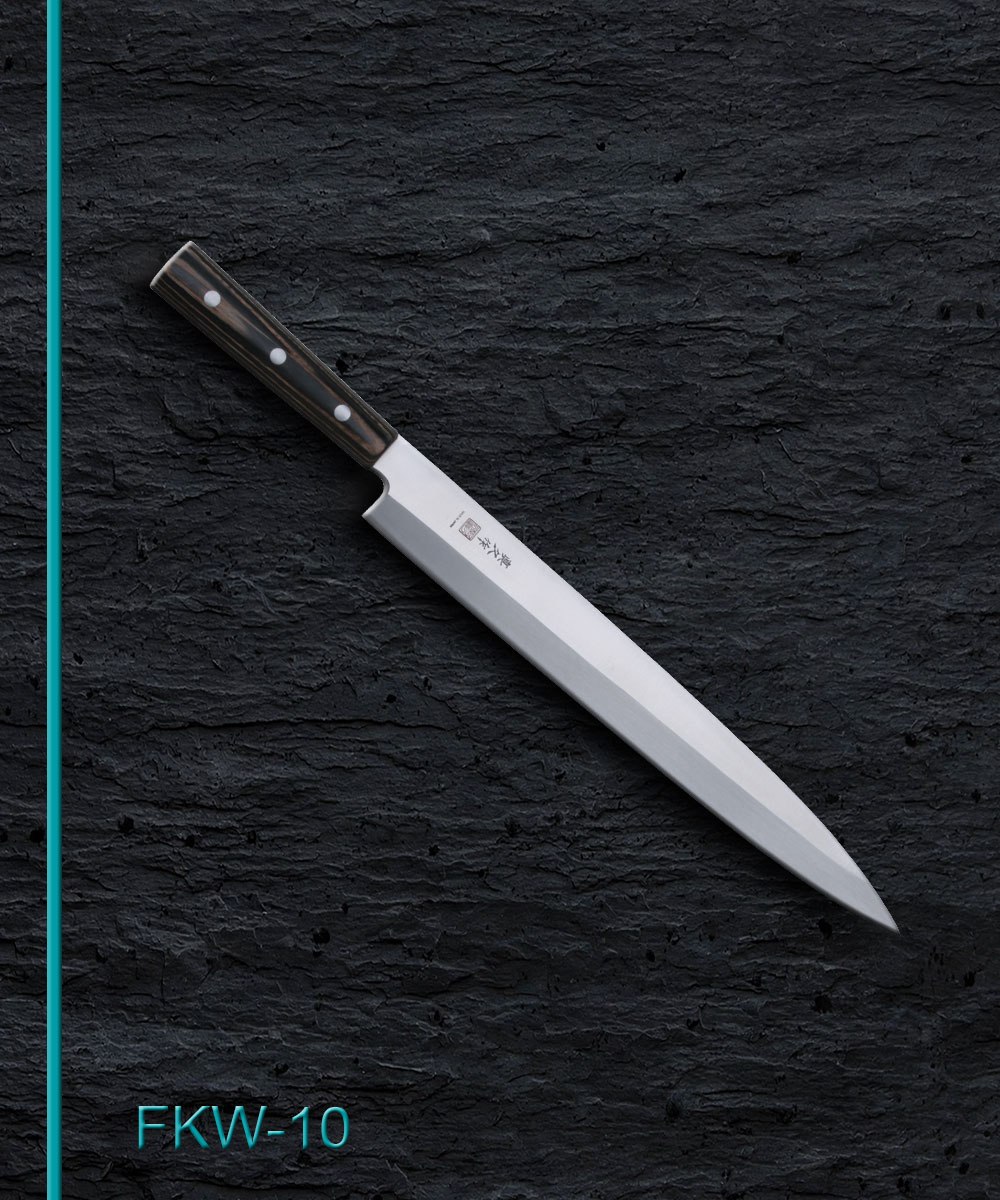
FKW-10

1,000.00  brutto

In stock

Additional information

Type of knife

, , , ,

Total length (mm)

Knife weight (g)

Steel type

Rockwell hardness of steel

Stain-resistant

Handle

Reviews

There are no reviews yet.

Be the first to review “FKW-10”

FKW-10

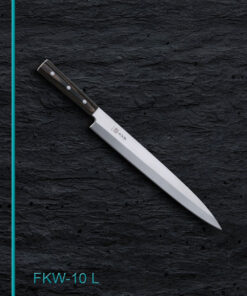
FKW-10 – a master-level Yanagiba for sashimi and sushi

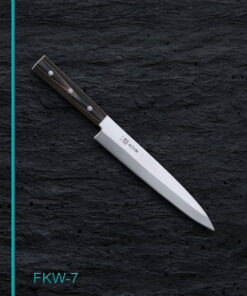
The FKW-10 from the JAPANESE series is a classic Japanese Yanagiba-style knife—one of the true cornerstones of Japanese cuisine. Its long, narrow, and exceptionally sharp blade is designed specifically for preparing sashimi, sushi, and working with raw fish.

The single-bevel edge (kataba) and precisely shaped tip allow the knife to be drawn along the fillet in one long, smooth motion. The result is perfectly clean, glossy slices of fish with an intact structure. This prevents the muscle fibers from being crushed, directly enhancing the flavor, texture, and visual appeal of the dish.

The FKW-10 excels at filleting and skinning fish, as well as at classic sashimi cutting techniques. The most popular of these is HIRA-ZUKURI—cutting fish into rectangular slices approximately 1 cm thick. This technique is commonly used for salmon, tuna, and butterfish, where both presentation and eating pleasure are essential.

Highly regarded by sushi masters and professional chefs, the FKW-10 meets the highest standards of precision and consistency. At the same time, it is an excellent choice for ambitious home cooks—the quality of the tool makes learning easier and delivers immediate, visible results that inspire further culinary development.

With left-handed users in mind, dedicated versions are also available:
FKW-10L, FKW-9L, and FKW-7L—offered in three different blade lengths, with no compromise in quality or precision.

Recommended recipe

Hijiki Salad – a classic Japanese seaweed dish

Hijiki no Nimono is a traditional Japanese seaweed salad prized for its nutritional value and deep umami flavor. Wild hijiki seaweed grows along the coasts of Japan and East Asia and is rich in dietary fiber, iron, calcium, and magnesium, while beautifully absorbing the flavors of dashi and soy sauce.

This dish works perfectly as a side for dinner, a bento component, or a light, plant-based appetizer.

Ingredients

  • 25 g dried hijiki seaweed

  • 2 pieces aburaage (fried tofu)

  • 100 g konnyaku (yam cake)

  • 125 g edamame

  • 480 ml dashi stock

  • 60 ml mirin

  • 60 ml soy sauce

  • 1 carrot, cut into thin strips

  • 15 ml vegetable oil

Preparation

  1. Hijiki
    Place the dried hijiki in a bowl, cover with cold water, and soak for about 30 minutes. Drain well.

  2. Aburaage
    Place the tofu on a sieve and pour boiling water over it to remove excess oil. Drain, slice thinly, and set aside.

  3. Edamame
    Boil the edamame in a pot of water for 5 minutes. Drain, rinse under cold water, then remove the beans from their pods.

  4. Konnyaku
    In the same pot of boiling water, cook the konnyaku for 3 minutes. Drain, slice thinly, and set aside.

  5. Cooking the salad
    Heat the oil in a medium saucepan over medium heat. Add the carrot and sauté briefly until slightly softened. Add the hijiki, aburaage, and konnyaku, and stir to combine.

  6. Simmering
    Pour in the dashi and bring to a boil. Add the mirin and soy sauce, reduce the heat, cover, and simmer for about 30 minutes until the ingredients absorb the flavors.

  7. Finish
    Add the edamame and continue cooking uncovered until most of the liquid has evaporated and the bottom of the pan becomes visible.

Serving

Serve warm or at room temperature as a side dish or as part of a Japanese bento meal.

Tips

  • Add lotus root (cook together with the carrot) for extra texture.

  • Replace mirin with yuzu juice for a brighter, citrusy note.

  • Sprinkle with toasted sesame seeds just before serving.

  • Store leftovers in an airtight container in the refrigerator for several days—the flavor improves by the next day.

A classic example of Japanese home cooking: simple, nourishing, and deeply flavorful.

You may also like…

Zdjęcia ilustrujące przepisy na stronach produktowych wykorzystano z serwisów: photo-ac.com, freepik.com i pixabay.com na podstawie licencji udzielanych przez owe serwisy.

Jeśli potrzebujesz pomocy przy wyborze noży, pomożemy Ci

Podaj swoje imię i nazwisko, numer telefonu oraz godziny w jakich możemy skontaktować się z Tobą.

Oddzwaniamy tylko pod numery telefonu z polskim numerem kierunkowym +48.