Skip to content
Japanese craftsmanship for the kitchen of tomorrow
Reliable Japanese quality
Enjoy cooking!
Feel the sharpness!
It's time, get started
znaki mac222

FREE DELIVERY from 350 PLN

* does not apply to cash on delivery shipments

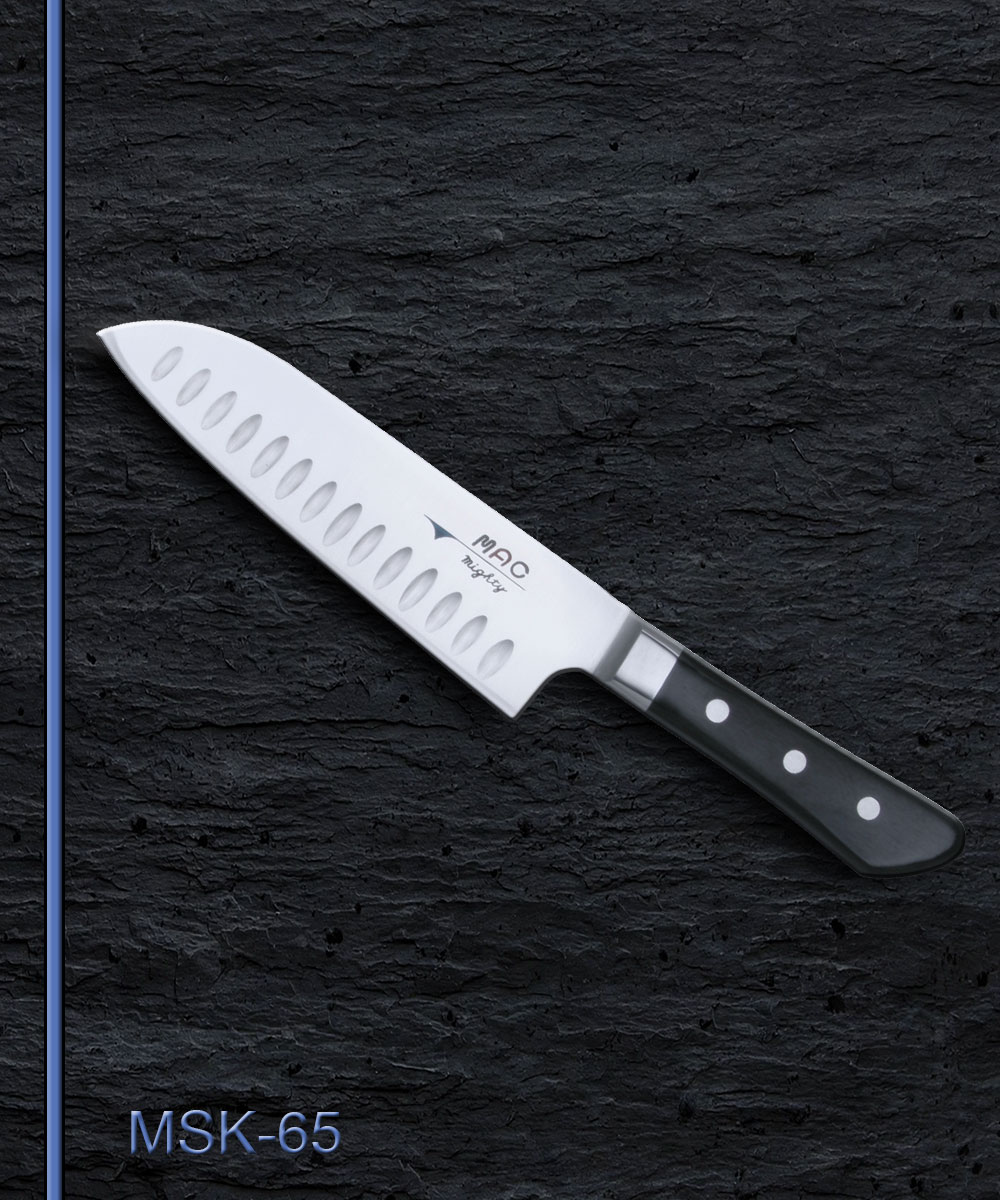
MSK-65

790.00  brutto

In stock

Additional information

Type of knife

, , , , , , , ,

Blade length (mm)

Total length (mm)

Knife weight (g)

Steel type

Rockwell hardness of steel

Stain-resistant

Handle

Reviews

There are no reviews yet.

Be the first to review “MSK-65”

MSK-65

MSK-65 Santoku — The Luxury Precision of Three Virtues

The PROFESSIONAL series is the cornerstone of MAC Knives’ prestige and a line that has long defined the standard of performance in professional kitchens around the world. These knives are created for master chefs, restaurateurs and perfectionists who demand absolute reliability, refined finishing and uncompromising quality. The MSK-65 Santoku embodies this philosophy — an elegant, versatile and exceptionally precise tool that merges Japanese craftsmanship with luxurious functionality.

Santoku, meaning “three virtues,” represents the harmony of cutting meat, fish and vegetables, as well as excellence in chopping, slicing and dicing. Introduced in Japan in the 1960s as a modern alternative to the traditional Nakiri vegetable knife, it quickly gained global recognition thanks to its versatility and outstanding ergonomics. Retaining the height and straight edge characteristic of the Nakiri, the Santoku features a subtly curved tip in a “sheepsfoot” profile, offering enhanced control and a refined, professional aesthetic.

The MSK-65 has been perfected down to the finest detail. Its blade is equipped with precisely crafted vertical dimples that create an air cushion during cutting, significantly reducing food adhesion. As a result, slices of vegetables, fruits, meat or fish effortlessly release from the blade, increasing speed, efficiency and overall comfort of use. The tall, thin blade allows for smooth, fast and highly accurate processing of large quantities of ingredients while preserving their texture and visual integrity — a quality especially valued in professional gastronomy.

The perfect balance and premium-grade materials used in production highlight the luxurious character of the Professional series. Each knife is meticulously finished by skilled Japanese craftsmen, ensuring exceptional sharpness, durability and timeless elegance in every detail. This is not merely a kitchen knife, but a statement of quality, precision and professional prestige at the workstation.

The MSK-65 Santoku is the choice of conscious users — chefs, restaurants and demanding culinary enthusiasts who expect absolute control, speed and perfection in every cut. Particularly recommended for intensive work with vegetables, firm fruits, as well as precise slicing and chopping, it performs flawlessly both in professional kitchens, including vegetarian-focused establishments, and in premium home kitchens.

Maintaining the legendary sharpness, longevity and luxury performance of the blade requires proper sharpening and regular care in accordance with the guidelines of Japanese master craftsmen, ensuring consistently outstanding results over time.

Recommended recipe

Sukiyaki Hot Pot

Sukiyaki emerged in Japan in the late 19th century during the Meiji period, when the country opened to Western influence and the consumption of beef became more common. Originally, it was prepared by farmers who grilled meat on metal plow blades (suki), which is where the dish’s name is believed to come from. Over time, it evolved into an elegant hot pot in which thinly sliced meat, tofu, vegetables, and noodles are simmered in a fragrant broth flavored with soy sauce, sugar, and mirin. Sukiyaki Hot Pot remains a symbol of communal cooking at the table—a dish that embodies simplicity, seasonality, and the warm ritual of sharing a meal, especially during colder days.

Ingredients:

250 ml sukiyaki sauce
100 g shirataki noodles
1 package tofu
320 g Japanese rice
300 g sukiyaki beef
1 package enoki mushrooms
6 rehydrated shiitake mushrooms
1 spring onion
1/2 Chinese cabbage (hakusai)
4 eggs

Begin by cutting all ingredients into small, bite-sized pieces.

Heat a large frying pan and lightly grease the bottom (with tallow or regular vegetable oil).

Add thin strips of beef or pork and begin to fry gently.

When the meat is almost cooked, add the sukiyaki sauce to the pan.

Finally, add the remaining ingredients once the sauce begins to boil.

Leave the ingredients in the pan to simmer and cook for a few minutes.

When ready, dip the cooked sukiyaki in a fresh raw egg and serve. Or, if you don’t want to dip it in a raw egg, hard-boil the eggs and eat them on the side.

It is usually eaten over a bowl of warm, cooked white rice.

Tips and Information

– Instead of sukiyaki sauce, you can use a mixture of 100 ml soy sauce, 100 ml sake, and 50 g sugar. – Alternatively, to add a little more umami flavor, try using 60 ml shoyu koji or soy sauce-flavored koji, 50 g sugar, and 250 ml water. Koji is a special type of edible mold that grows on rice, and the enzymes it contains help soften the food and also add umami flavor. – In addition to the vegetables above, you can use other vegetables and mushrooms, such as shimeji mushrooms, carrots, and leeks; these ingredients are versatile and work well in many recipes. – You can add udon noodles at the end, which also tastes very good.

You may also like…

Zdjęcia ilustrujące przepisy na stronach produktowych wykorzystano z serwisów: photo-ac.com, freepik.com i pixabay.com na podstawie licencji udzielanych przez owe serwisy.

Jeśli potrzebujesz pomocy przy wyborze noży, pomożemy Ci

Podaj swoje imię i nazwisko, numer telefonu oraz godziny w jakich możemy skontaktować się z Tobą.

Oddzwaniamy tylko pod numery telefonu z polskim numerem kierunkowym +48.