


MSK-201
990.00 zł Original price was: 990.00 zł.839.00 złCurrent price is: 839.00 zł. brutto
In stock
Additional information
| Knives included | SK-40, MSK-65 |
|---|---|
| Type of knife | a dimple knife, chef's knife, fish knife, peeling knife, professional knife, Santoku, sushi knife, vegetable knife, versatile knife, for meat |
| Weight (g) | |
| Blade edge | |
| Steel type | |
| Rockwell hardness of steel | |
| Stain-resistant | |
| Handle |
Be the first to review “MSK-201” Cancel reply
You must be logged in to post a review.
Sale!


MSK-201
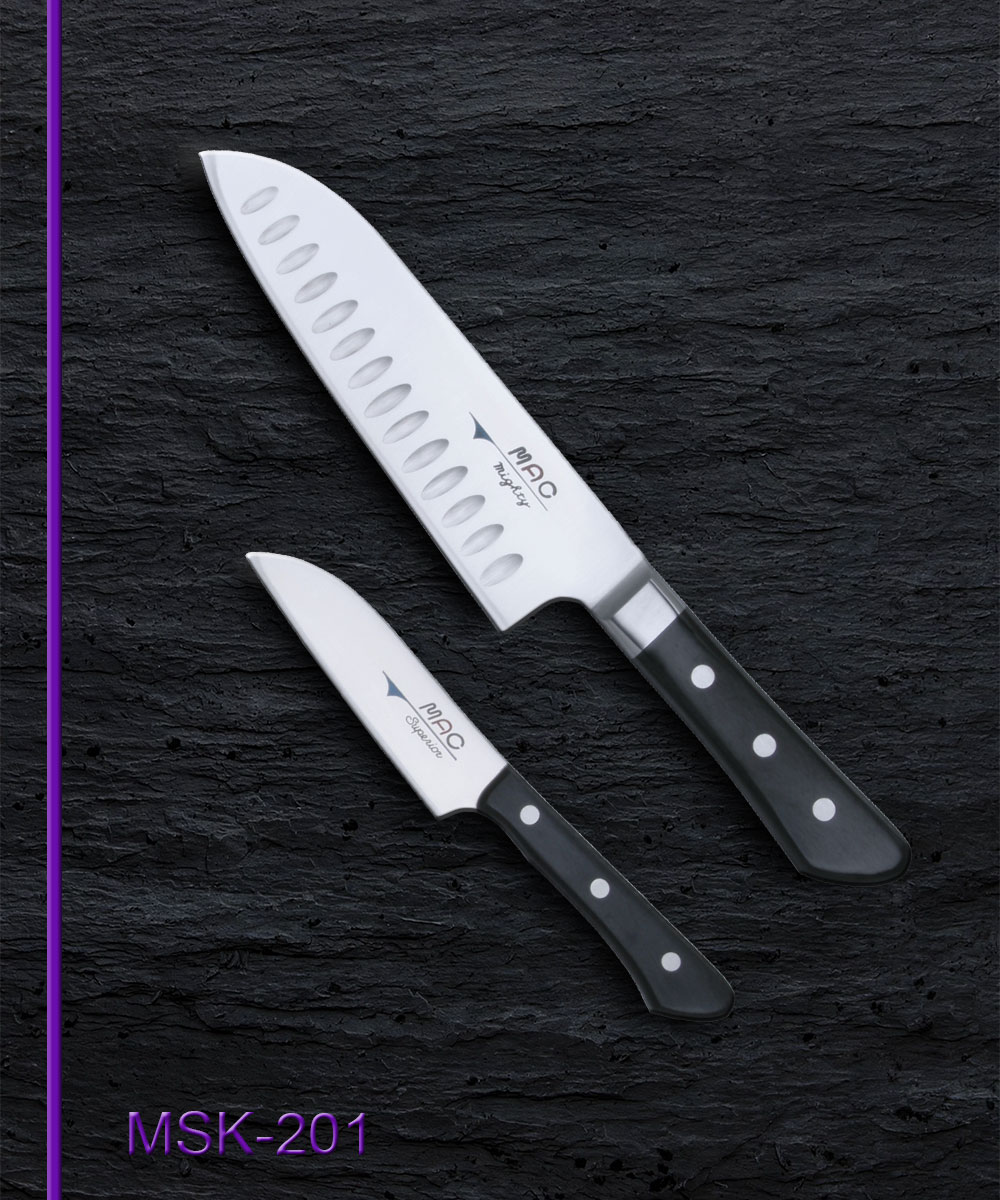
The MSK-201 kitchen knife set consists of a Santoku knife and a paring knife. These professional tools allow you to expertly prepare a variety of dishes that will beautifully present themselves on the plate. The PROFESSIONAL series knives feature the unique “MAC edge” shape, patented since 1965 and recognized by many professional chefs. The blades are made of MAC Steel (AUS8), a solid steel with a hardness of 59 on the Rockwell scale. The handle is made of PAKKA wood, a highly durable material resistant to water absorption. MAC knives are sharpened thin and sharp, like a single traditional Japanese knife, by experienced craftsmen in the city of Seki, a region renowned for its kitchen knife production. The blade’s unique edge and the highest manufacturing standards guarantee reliable sharpness and precise cutting. This highly practical set also makes a great gift idea that will surely delight cooking enthusiasts and be appreciated by professional chefs.
The MSK-65 is a versatile Santoku-style kitchen knife with recessed edges, similar to the European chef’s knife. Santoku knives first appeared in the 1960s as an alternative to the traditional vegetable cleaver known as the Nakiri. While retaining the straight edge and height of the Nakiri, Santoku knives also have a slightly curved tip, often referred to as “sheep’s foot” knives due to their appearance. The word Santoku means “three virtues,” some say meat, fish, and vegetables, while others interpret it as chopping, slicing, and dicing. Regardless of which trio is closer to this interpretation, the Santoku quickly became the most popular kitchen knife in Japan and soon found its way into the hands of chefs worldwide. Furthermore, the MSK-65 knife features special vertical recesses to allow air to fill the blade during cutting, allowing slices to fall off the blade more easily when cut quickly. Combined with a tall blade, it can easily and quickly cut large quantities of vegetables and hard fruits, and is also suitable for chopping and slicing meats. We especially recommend this Japanese chef’s knife for use in restaurants with vegetarian menus and other establishments where a lot of vegetables are used.
The SK-40 is a paring knife. It was created as a smaller, more convenient version of the Santoku knife. It easily removes peels from fruits and vegetables. Its sharpness makes peeling practically imperceptible. The knife was created to be used by both master chefs and those just starting out in the culinary arts. The knife’s ease of use allows professional chefs and amateurs alike to enjoy preparing their favorite dishes more. We recommend this knife to any chef looking for the right equipment for their restaurant, as such accessories are essential for such a frequent task as peeling. Its shape also works well for auxiliary tasks like spreading pastes or butter; it’s one of my favorite small knives. Although the SUPERIOR series of MAC Japanese kitchen knives resembles the ORIGINAL series, they differ in blade thickness and weight. Superior knives are lighter and have a thinner blade, providing added convenience for those who prefer to work with lightweight knives.
The knife care and sharpening guide includes useful information on the proper use of knives.
Recommended recipe
Goya Chanpuru
Try this Okinawan summer favorite — Goya Chanpuru, a colorful stir-fry featuring the vibrant green bitter melon (goya). Originating from the sunny island of Okinawa, Japan’s southernmost prefecture, this dish combines goya, soy sauce, tofu, pork, and eggs into a nutritious and energizing meal. It’s the perfect way to beat the Okinawan summer heat, fight off late-summer fatigue, and recharge for the autumn season.
Ingredients:
• 1 goya (bitter melon / karela)
• 1 tsp salt
• 1 block tofu
• 100–200 g sliced pork (or ½–1 can of luncheon meat)
• 2–3 eggs
• 1 tsp sesame oil
• 1 tsp dashi granules
• 2 tsp sake
• 1 tsp soy sauce
• bonito flakes
• mayonnaise
Preparation:
Slice the goya in half lengthwise. Scoop out the seeds and the white spongy core with a spoon, then cut into thin slices. Sprinkle with 1 teaspoon of salt and let sit for 5 minutes.
Drain the tofu and pat it dry with a kitchen towel. Wrap it in a towel and place a flat, heavy object (like a cutting board) on top to press out excess water. Then microwave it for 3–4 minutes at 500 W. Cut the pork into rectangular strips.
Heat sesame oil in a frying pan, crumble the tofu by hand, and stir-fry until golden and most of the moisture has evaporated. Transfer to a plate and set aside.
Rinse the goya, then add it to the pan with the pork. Cook until both are heated through, then return the tofu to the pan. Sprinkle in the dashi granules, add sake and soy sauce, and mix well.
In a separate bowl, beat the eggs (add a pinch of salt if desired) and pour them into the pan. Cook until the eggs are just set. Taste your goya chanpuru and adjust seasoning with more soy sauce or dashi if needed.
Serve on a plate and garnish with mayonnaise and bonito flakes.
Tips:
• Goya has a pleasant but mildly bitter flavor. If you’re sensitive to bitterness, briefly blanch the goya slices in hot water for 30 seconds before stir-frying — this reduces the sharpness. A touch of oyster sauce can also mellow the taste.
• Goya (bitter melon) goes by many names around the world: karela, karavella, kugua, korola, cerasee, kudret narı, and more. It’s popular across the Middle East, Africa, Asia, Southeast Asia, the Caribbean, and South America — so you can usually find it in Asian or international grocery stores. It’s also used in Ayurvedic medicine, so you may spot it in health food shops as well.

You may also like…


Zdjęcia ilustrujące przepisy na stronach produktowych wykorzystano z serwisów: photo-ac.com, freepik.com i pixabay.com na podstawie licencji udzielanych przez owe serwisy.
Reviews
There are no reviews yet.