Additional information
| Type of knife | |
|---|---|
| Blade length (mm) | |
| Total length (mm) | |
| Knife weight (g) | |
| Steel type | |
| Rockwell hardness of steel | |
| Stain-resistant | |
| Handle |
* does not apply to cash on delivery shipments
200.00 zł brutto
In stock
| Type of knife | |
|---|---|
| Blade length (mm) | |
| Total length (mm) | |
| Knife weight (g) | |
| Steel type | |
| Rockwell hardness of steel | |
| Stain-resistant | |
| Handle |
You must be logged in to post a review.
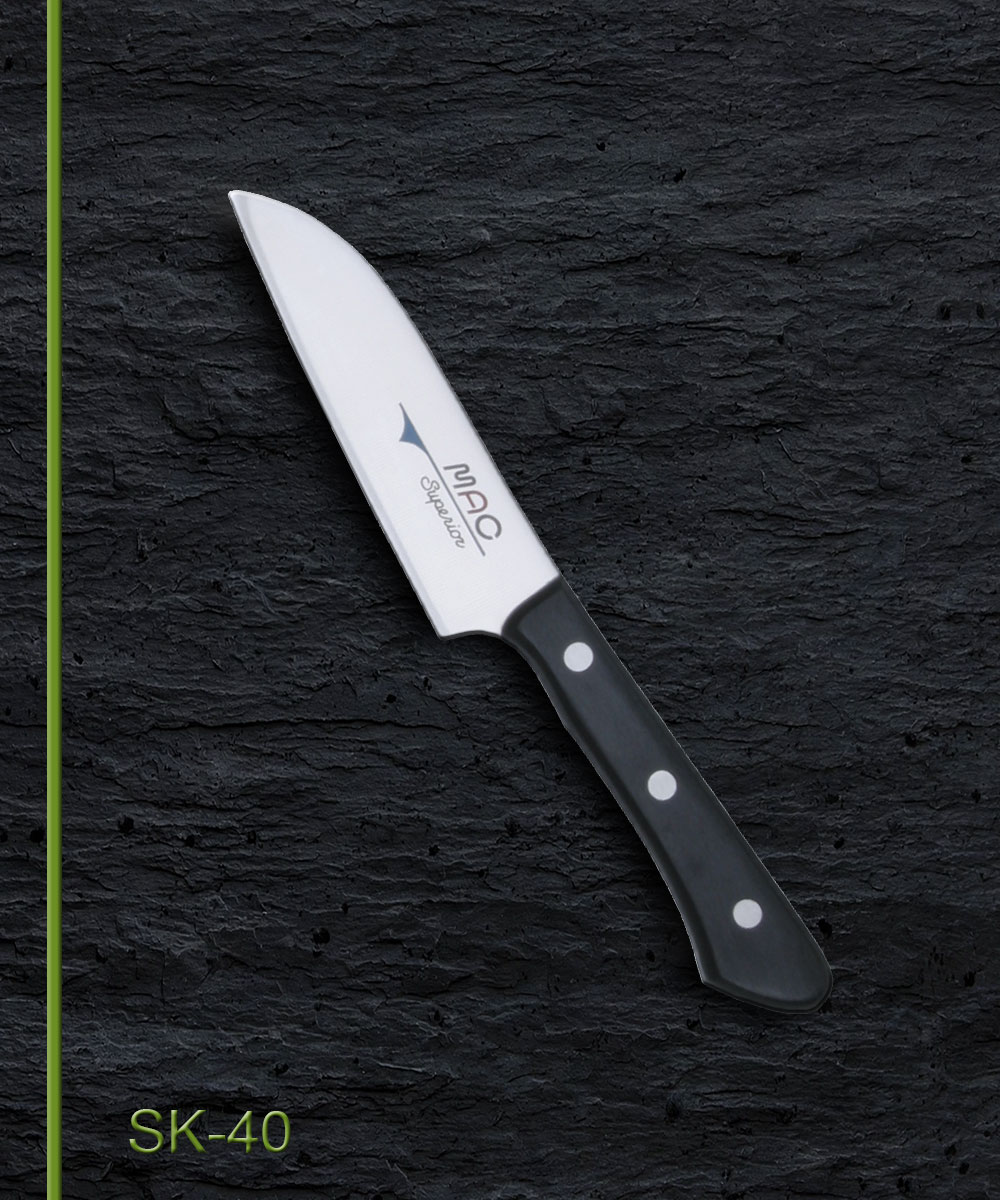
SK-40 – a small knife that does a big job
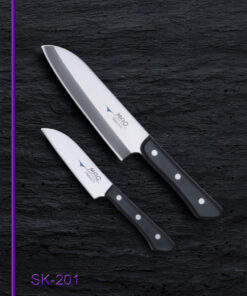
The SK-40 from the MAC Superior series is a light, precise peeling knife designed for maximum control and comfort. It stands out with its thinner blade and lower weight, making it an ideal choice for those who value speed, lightness, and cutting accuracy.
The SK-40 was designed as a small Santoku – it retains the characteristic shape and versatility of a Santoku knife, but in a compact, exceptionally handy form. As a result, peeling fruits and vegetables becomes almost effortless, and the excellent sharpness allows the blade to glide through the skin with virtually no resistance. The knife also performs perfectly in auxiliary tasks such as spreading pastes or butter and making precise adjustments to ingredients.
The knife is designed so that it can be used with equal ease by professional chefs and by those just beginning their cooking journey. Excellent ergonomics and balance make working with it a genuine pleasure, regardless of experience. In both home and professional kitchens, it is an essential tool – peeling is one of the most frequently performed tasks.
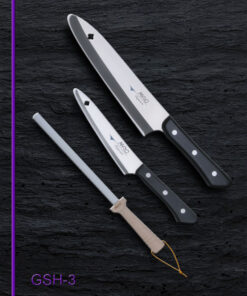
The SK-40 is also available in carefully selected MAC knife sets, making it an excellent choice both as a standalone purchase and as part of a complete kitchen setup.
This is one of those small knives that very quickly becomes a favorite and is always kept within reach.
To ensure the knife performs well for many years and retains its properties, regular sharpening and proper care are essential.
Gyoza are Japanese crescent-shaped dumplings, most often served as an appetizer or a side dish. They are known for their thin wrappers, aromatic filling, and the contrast between a crispy bottom and a juicy, tender interior. This recipe shows how to prepare classic pan-fried and steamed gyoza, just like those served in Japanese restaurants.
Filling:
200 g cabbage (preferably Napa or white cabbage)
150 g ground pork
2 cloves garlic
1 scallion (or green onion)
approx. 2 cm fresh ginger (optional)
1 tsp sesame oil
1 tsp soy sauce
Additionally:
30 gyoza wrappers
oil for frying
water for steaming
Dipping sauce:
2 tbsp soy sauce
2 tbsp rice vinegar
1 tsp La-Yu chili oil
Cabbage
Boil a few cabbage leaves in lightly salted water until soft. Squeeze out excess water thoroughly and finely chop.
Filling
Finely chop the garlic, scallion, and ginger. Place them in a bowl together with the cabbage and ground pork. Add the sesame oil and soy sauce. Mix well until the mixture becomes uniform and slightly sticky.
Set aside for 10–15 minutes to let the flavors develop.
Shaping the gyoza
Place a gyoza wrapper on your palm. Put a teaspoon of filling in the center. Lightly moisten the edges with water, fold in half, and seal.
Create pleats on one side only; the opposite side should remain flat.
Frying
Heat a thin layer of oil in a frying pan. Arrange the gyoza flat-side down. Fry over medium-high heat until the bottoms are golden and crispy.
Steaming
Pour a small amount of water into the pan so it reaches about halfway up the dumplings. Immediately cover with a lid.
Cook over medium heat until the water has completely evaporated.
Final crisping
Once the water is gone, leave the gyoza on the pan for a short moment to re-crisp the bottoms.
Serve the gyoza with the crispy side facing up. Prepare the dipping sauce by mixing soy sauce, rice vinegar, and La-Yu chili oil.
Alternatively, you can use a ready-made gyoza dipping sauce.
A 1:1 ratio of meat to vegetables gives a juicy yet light filling.
For a vegetarian version, replace the pork with shiitake mushrooms.
Gyoza can also be boiled or steamed instead of pan-fried.
Uncooked, shaped gyoza can be frozen for later use.
A gyoza press speeds up the process and ensures consistent results.

In stock

In stock

In stock

In stock

In stock

In stock

In stock

In stock
Zdjęcia ilustrujące przepisy na stronach produktowych wykorzystano z serwisów: photo-ac.com, freepik.com i pixabay.com na podstawie licencji udzielanych przez owe serwisy.
Podaj swoje imię i nazwisko, numer telefonu oraz godziny w jakich możemy skontaktować się z Tobą.
Oddzwaniamy tylko pod numery telefonu z polskim numerem kierunkowym +48.
Reviews
There are no reviews yet.