


SE-DE-210
16,899.00 zł brutto
Check availability.
sklep@macknives.pl
+48 733 804 975
Additional information
| Type of knife | cleaver knife, Deba, exclusive knife, filleting knife, fish knife, hand-forged knife, professional knife, sushi knife, for meat, Honoyaki knife |
|---|---|
| Total length (mm) | |
| Blade length (mm) | |
| Knife weight (g) | |
| Steel type | |
| Rockwell hardness of steel | |
| Stain-resistant | |
| Handle | Comfortable eight-sided ebony handles with buffalo horn reinforcements and silver ring |
| Blade edge |
Be the first to review “SE-DE-210” Cancel reply
You must be logged in to post a review.
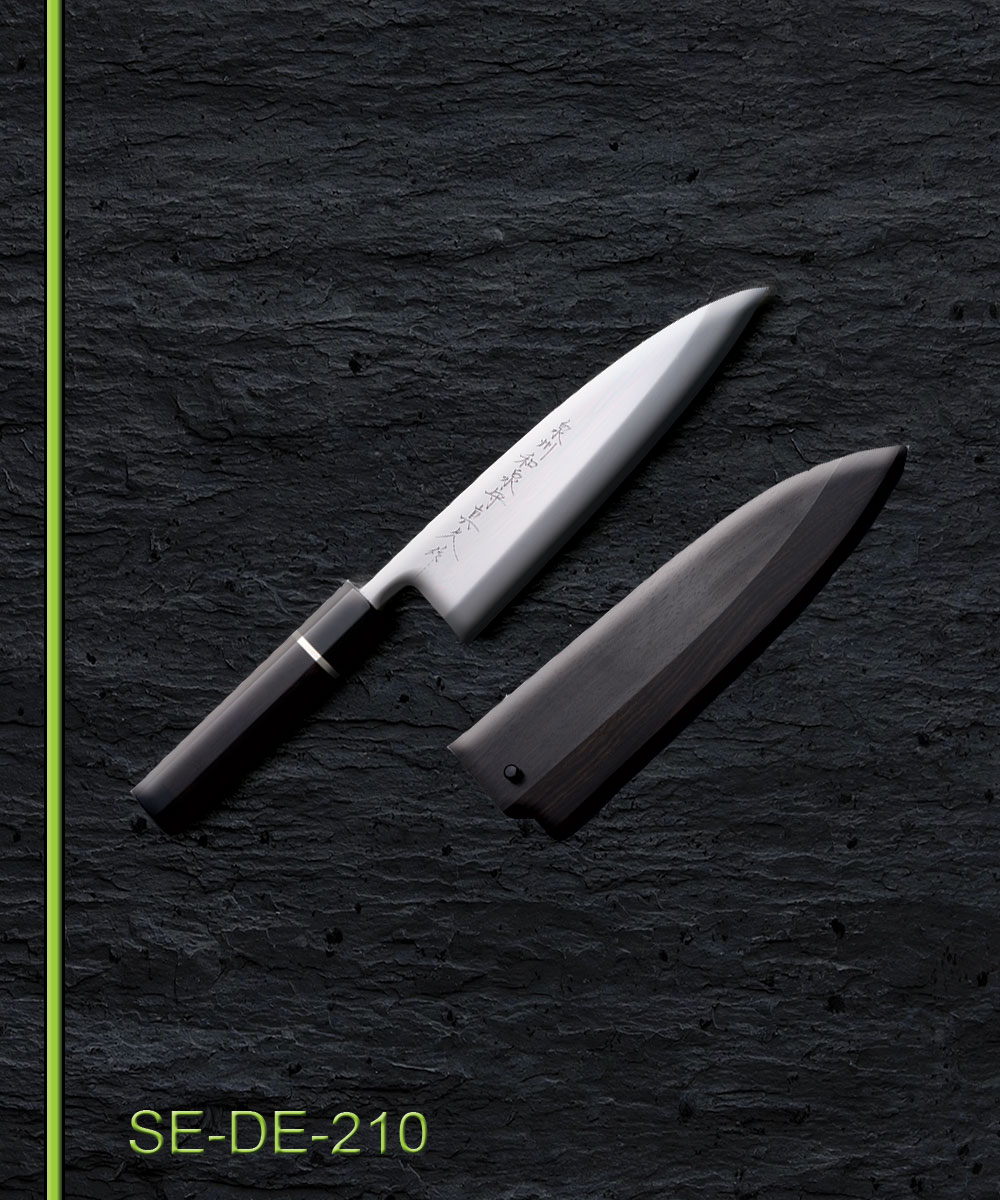


SE-DE-210
SE-DE-210 Deba bōchō — Raw Power of Craftsmanship. Precision Without Compromise
The SE-DE-210 from the elite MAC SE series is a manifestation of the primal strength of the Japanese kitchen knife—a tool created for work where precision must coexist with mass, stability, and absolute trust in the blade. This is a knife for those who understand that true craftsmanship is not always subtle; sometimes it must be uncompromisingly effective.
Each piece is handcrafted in Sakai through a process that takes months and demands master-level experience and total control over the steel. The blade is forged using the prestigious Honyaki technique from solid Yasuki Shirogami (White Steel)—a legendary material that is demanding and unforgiving of mistakes. Known for its exceptional structural purity, this steel can achieve extreme sharpness and responds perfectly to differential hardening. In the SE series, there is no room for compromise—any deviation results in the blade being rejected.
Differential hardening gives the Deba its distinctive character: an extremely hard cutting edge combined with a massive, stable blade body. This balance allows heavy-duty tasks to be performed with full control, without sacrificing refined cutting performance or risking unpredictable blade behavior.
The Kasumi finish is the result of prolonged, meticulous hand polishing with water stones. It gives the blade a noble, milky, mist-like surface that subtly contrasts with the raw, powerful nature of the Deba. This finish is not decorative—it is a mark of master craftsmanship, instantly recognizable to professionals and collectors.
The SE-DE-210 is a Deba bōchō (出刃包丁)—a knife with a thick, heavy blade, single-bevel sharpened in the kataba style. Unlike slender slicing knives, the Deba is designed for working with whole fish: cleaning, removing heads and tails, filleting, and working through cartilage and small bones. With proper technique, the Deba can also be safely used to split and crack crab legs and claws.
The first Deba knives appeared during the Edo period in Sakai Prefecture and have remained a cornerstone of Japanese fish cuisine ever since. The traditional Hon-deba was used not only for fish, but also for breaking down poultry and meats with small bones. The substantial weight of the blade is an advantage here—when used with care, the solid heel of the knife can be employed to cut through bones found in small to medium fish and poultry.
The spine of the Deba tapers significantly toward the tip, resulting in a surprisingly thin and sensitive point. This allows the user to feel precisely when the blade is contacting bone—an essential quality when filleting. The combination of a powerful heel and a precise tip makes the Deba far more agile than its weight might suggest.
Balance concentrated near the heel of the blade, combined with a solid handle, gives a strong sense of control. The SE-DE-210 can be brutally effective in heavy tasks, yet unexpectedly precise when more delicate work is required.
Because Japanese cuisine works with many different sizes and species of fish and seafood, Deba knives exist in numerous forms and sizes, including Mioroshi Deba, Ai-deba, and Ko-deba. The SE-DE-210 represents the classic, most versatile form—designed for professional use, without compromise and without pretending to be an all-purpose tool.
The SE-DE-210 is not a knife chosen casually.
It is a tool of responsibility—for chefs who understand that power in the kitchen must go hand in hand with control, and that true luxury reveals itself when a tool never fails.
Recommended recipe
Chicken Katsu
Chicken katsu is one of the most iconic dishes of Japanese home cooking—crispy, juicy chicken cutlets coated in panko breadcrumbs, fried until golden and served with rice and sweet, tangy tonkatsu sauce. The key to perfect katsu lies in properly prepared meat, well-seasoned breading, and careful control of the oil temperature.
Ingredients
1 pound (about 450 g) chicken breasts
2 tablespoons sherry or rice wine
1 tablespoon soy sauce
3 teaspoons salt, divided
1½ teaspoons freshly ground black pepper, divided
½ cup all-purpose flour
3 large eggs
2 cups panko breadcrumbs
1 cup vegetable oil, for frying
short-grain rice, for serving
tonkatsu sauce, for serving
scallions, finely chopped, for serving
Cut the chicken breasts lengthwise into two even cutlets. Gently pound each piece to a thickness of about 1.5 cm (½ inch), keeping the meat as even as possible. Place the cutlets in a shallow dish, drizzle with the soy sauce and sherry (or rice wine), cover, and marinate for at least 15 minutes and up to 4 hours. If marinating longer than 15 minutes, refrigerate the chicken.
In a shallow bowl, combine the flour with 1 teaspoon of salt and ½ teaspoon of black pepper. Remove the chicken from the marinade, reserving the liquid for later use. Dredge each cutlet thoroughly in the seasoned flour, shaking off any excess.
Add another 1 teaspoon of salt and ½ teaspoon of black pepper to the reserved marinade, then whisk in the eggs until smooth. Dip the floured chicken cutlets into the egg mixture, coating both sides evenly.
Place the panko breadcrumbs in another shallow bowl, add the remaining salt and pepper, and mix gently. Transfer the chicken to the panko and coat thoroughly, pressing lightly so the crumbs adhere well. For an extra-thick, ultra-crispy crust, you can dip the cutlets back into the egg mixture and then again into the panko.
Heat the oil in a large frying pan over medium heat. To test if the oil is ready, drop in a few panko crumbs—if they sizzle immediately, the oil is hot enough. Fry two cutlets at a time for about 2–3 minutes per side, until the coating is golden brown and crisp. Adjust the heat as needed to prevent burning. This is shallow frying, not deep frying.
Drain the cooked cutlets on a plate lined with paper towels or place them on a wire rack set over a baking sheet. While frying the remaining cutlets, you can keep the finished ones warm in an oven set to about 95°C (200°F) so they stay hot and crispy.
Serve the chicken katsu with steamed short-grain rice, tonkatsu sauce, and a sprinkle of chopped scallions.

You may also like…
-
Out of stock
SE-FK-360
15,500.00 zł bruttoCheck availability.
sklep@macknives.pl
+48 733 804 975 -
Out of stock
SE-FK-300
12,999.00 zł bruttoCheck availability.
sklep@macknives.pl
+48 733 804 975 -
Out of stock
SE-FK-270
11,999.00 zł bruttoCheck availability.
sklep@macknives.pl
+48 733 804 975 -
Out of stock
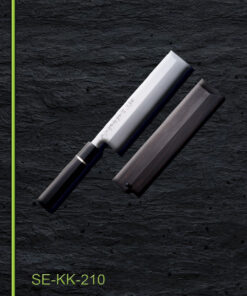
SE-KK-210
13,699.00 zł bruttoCheck availability.
sklep@macknives.pl
+48 733 804 975 -
Out of stock
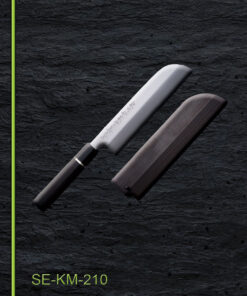
SE-KM-210
13,599.00 zł bruttoCheck availability.
sklep@macknives.pl
+48 733 804 975
Zdjęcia ilustrujące przepisy na stronach produktowych wykorzystano z serwisów: photo-ac.com, freepik.com i pixabay.com na podstawie licencji udzielanych przez owe serwisy.

Reviews
There are no reviews yet.